

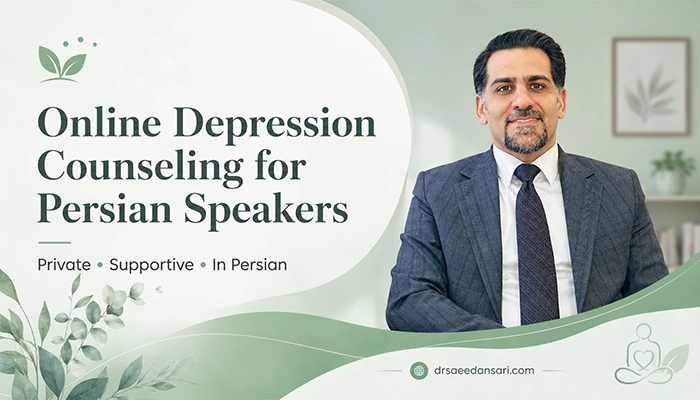
Online depression therapy for Iranian immigrants provides culturally informed psychological support for people experiencing persistent sadness, loneliness, emotional exhaustion, or difficulty adapting to life after migration. Receiving therapy in Persian can make it easier to discuss sensitive emotions, family relationships, cultural expectations, and immigration-related challenges without constantly translating your thoughts.
Online depression counseling for Persian speakers is also available to individuals living inside Iran who prefer confidential and accessible psychological support from home. Treatment is based on an individual assessment and may include psychotherapy, psychiatric evaluation, or medication management when clinically appropriate.
In this article, you will learn why depression may develop after immigration, how to recognize its symptoms, how online treatment works, and when professional support should be considered.
Why Is Depression Common Among Iranian Immigrants?
Immigration is one of life’s biggest transitions. Even when someone chooses to move voluntarily, adapting to a completely different society requires continuous psychological adjustment.
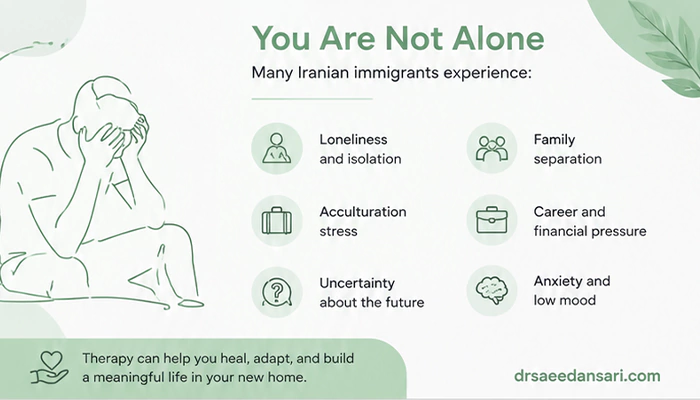
Many Iranian immigrants experience stress from learning a new language, finding employment, establishing friendships, understanding unfamiliar social norms, and rebuilding their identity. When several of these challenges occur simultaneously, emotional resilience may gradually decline.
In addition, many immigrants carry emotional burdens from before migration. Financial concerns, political uncertainty, academic pressure, or difficult family circumstances may continue to affect mental health long after arriving in a new country.
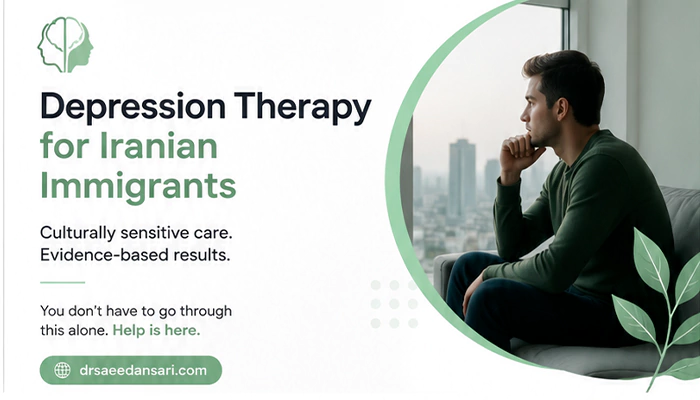
Feeling overwhelmed after moving abroad?
You don’t have to face depression alone. Book an online session with Dr. Saeed Ansari and receive compassionate, culturally informed support in Persian—wherever you are in the world.
Common Risk Factors
Several factors increase the likelihood of depression among Iranian immigrants:
- Separation from family and close friends
- Language and communication difficulties
- Cultural adjustment stress
- Loss of previous professional identity
- Financial instability
- Homesickness
- Social isolation
- Discrimination or feeling misunderstood
- Immigration-related uncertainty
Although these experiences are common, they should not become a permanent part of life. Early support often leads to faster recovery.
…»Farsi Child Psychologist Online for Children«…
Symptoms of depression after migration
Feeling homesick during the first months after migration is natural. However, depression involves symptoms that persist for weeks and begin interfering with daily functioning.
Some people notice emotional symptoms first, while others mainly experience physical changes.
Typical symptoms include:
- Persistent sadness
- Loss of motivation
- Feeling emotionally numb
- Sleep disturbances
- Fatigue
- Difficulty concentrating
- Feelings of guilt or worthlessness
- Loss of interest in enjoyable activities
- Appetite changes
- Social withdrawal
If several of these symptoms continue for more than two weeks, speaking with a qualified mental health professional is strongly recommended.
Normal Homesickness or Clinical Depression?
Many Iranian immigrants wonder whether what they feel is simply homesickness or something more serious.
The following comparison may help.
| Homesickness | Depression |
|---|---|
| Usually improves with time | Often persists or worsens |
| Triggered mainly by missing home | Affects many areas of life |
| Mood improves after talking with loved ones | Positive experiences bring little relief |
| Daily functioning remains mostly intact | Work, study, or relationships become difficult |
| Temporary emotional discomfort | Ongoing psychological condition requiring treatment |
Understanding this difference is important because untreated depression can affect physical health, relationships, career development, and overall quality of life.
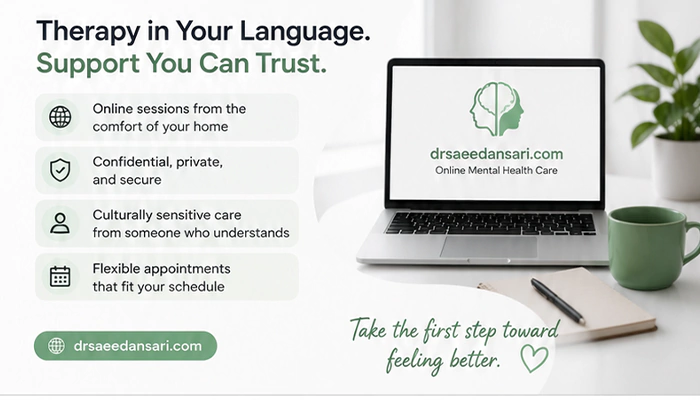
If you have been struggling with sadness, loneliness, or emotional exhaustion since moving abroad, scheduling an Farsi Therapy Online with Dr. Saeed Ansari can be an important first step. Receiving therapy in Persian allows you to express complex emotions naturally while working with someone who understands the unique experiences of Iranian immigrants.
Why Receiving Therapy in Your Native Language Matters
Many immigrants are able to communicate in English at work or university but still find it difficult to describe deep emotions in a second language.
Psychotherapy depends on nuance, emotional expression, and trust. Speaking Persian often allows clients to describe childhood memories, family dynamics, cultural expectations, and emotional experiences with far greater accuracy.
Working with an Online Persian psychologist provides both linguistic comfort and cultural understanding. Instead of spending valuable therapy time explaining traditions or family expectations, you can focus directly on healing and personal growth.
Research consistently shows that culturally responsive therapy improves engagement, communication, and long-term treatment outcomes for many immigrant populations.
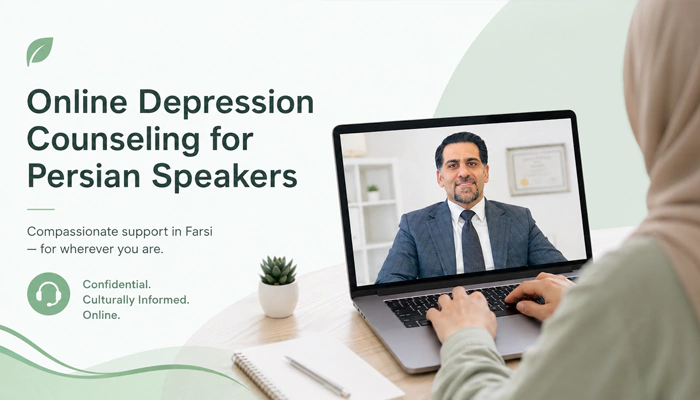
Online Depression Counseling for Persian Speakers
Online depression counseling for Persian speakers allows clients to discuss their emotional concerns in a language that feels familiar and natural. This can be especially helpful when depression is connected to family expectations, childhood experiences, grief, relationship difficulties, cultural identity, or the emotional effects of immigration.
During treatment, the therapist or psychiatrist first evaluates the client’s symptoms, personal history, daily functioning, and treatment goals. The treatment plan is then personalized according to the severity of symptoms and the individual’s clinical needs.
How Depression Therapy Helps Iranian Immigrants
Depression treatment is not simply about reducing sadness. Effective therapy helps people understand the thoughts, behaviors, and emotional patterns that keep depression going.
During therapy, clients gradually learn healthier coping strategies while rebuilding confidence and emotional resilience.
Some of the most important goals include:
- Identifying negative thinking patterns
- Learning healthier emotional regulation
- Reducing anxiety and hopelessness
- Improving relationships
- Building new social connections
- Increasing motivation
- Restoring work-life balance
- Creating realistic goals for life after immigration
Therapy also provides a confidential space where clients can discuss challenges they may hesitate to share with family or friends.
In many cases, depression is closely connected with broader issues affecting Iranian Mental Health for Immigrants such as identity changes, acculturation stress, and balancing two different cultures. Addressing these interconnected factors often leads to more sustainable emotional recovery.
Treatment Approaches Used for Depression
Depression treatment should be selected after a professional assessment rather than using the same approach for every client. Depending on the individual’s symptoms and needs, treatment may involve psychotherapy, psychiatric assessment, or medication management.
Dr. Saeed Ansari uses therapeutic approaches such as Acceptance and Commitment Therapy (ACT), Emotion-Focused Therapy (EFT), and Compassion-Focused Therapy (CFT). These approaches may help clients understand emotional patterns, respond more effectively to difficult thoughts, reduce avoidance, and develop healthier ways of managing distress.
When medication may be appropriate, a psychiatric assessment is required to determine whether it should be included as part of the treatment plan.
How Does Depression Online Therapy in Iran Work?
Depression online therapy in Iran usually begins with an initial assessment. During the first session, the psychiatrist or therapist asks about current symptoms, how long they have been present, their effect on work, study, sleep, relationships, and daily life, as well as any previous treatment history.
After the assessment, clear treatment goals are discussed and an appropriate treatment plan is recommended. Online sessions can then be scheduled from a private location with a reliable internet connection.
A typical online treatment process may include:
- Initial evaluation of depression symptoms
- Discussion of personal and medical history
- Identification of treatment goals
- Selection of an appropriate therapeutic approach
- Regular online sessions
- Review of progress and adjustment of the treatment plan
- Psychiatric or medication assessment when clinically indicated
Online therapy can improve access to professional support, but it is not suitable for every situation. People experiencing an immediate mental health crisis, active suicidal thoughts, severe confusion, or an inability to remain safe should contact local emergency services or seek urgent in-person care.
Who Can Benefit from Online Depression Counseling?
Online depression counseling may be appropriate for:
- Persian speakers living in Iran
- Iranian immigrants living abroad
- International students experiencing loneliness or adjustment stress
- People who find it difficult to discuss emotions in English
- Individuals experiencing persistent sadness or loss of motivation
- People whose symptoms affect work, study, sleep, or relationships
- Clients seeking culturally informed psychological support in Farsi
- Individuals who have limited access to a Persian-speaking therapist nearby
The suitability of online treatment is determined through an individual clinical assessment.
Depression can affect motivation, relationships, work, sleep, and overall quality of life, but professional support is available. Whether you live in Iran or abroad, receiving online depression therapy in Persian can help you discuss your concerns in a culturally familiar and confidential setting.
To begin, schedule an online consultation with Dr. Saeed Ansari for an individual assessment and a treatment plan based on your symptoms and needs.

Important: Online appointments are not a substitute for emergency mental health services. If you or someone else is in immediate danger or experiencing thoughts of suicide or self-harm, contact local emergency services or a crisis support service in your country
Frequently Asked Questions
Yes. Persian-speaking clients living in Iran may attend online depression therapy sessions from a private location. The first session is generally used to assess symptoms, treatment history, daily functioning, and clinical needs.
Yes. Online depression counseling is available to Persian speakers living abroad, including Iranian immigrants and international students who prefer to receive psychological support in Farsi.
Sessions can be conducted in Farsi, allowing clients to discuss emotional experiences, relationships, family concerns, and cultural issues in their native language.
Online therapy may be used for some people with depression, but suitability depends on symptom severity, safety, medical history, and the results of a clinical assessment. Urgent or life-threatening situations require immediate local emergency or in-person care.
The first session focuses on understanding the client’s symptoms, personal history, current difficulties, previous treatment, and goals. The therapist or psychiatrist then recommends an appropriate treatment plan.
Medication may be considered after a psychiatric assessment when clinically indicated. Whether medication is needed depends on the type and severity of symptoms, medical history, and individual circumstances.