

Living abroad can be full of opportunity, but it can also bring emotional pressure, loneliness, identity challenges, relationship stress, and a deep sense of distance from home. For many Iranian immigrants, speaking about these feelings in English may not feel natural enough—especially when the topic is personal, emotional, or connected to family, culture, childhood, marriage, parenting, or migration.
This is where Farsi therapy online can make a meaningful difference.
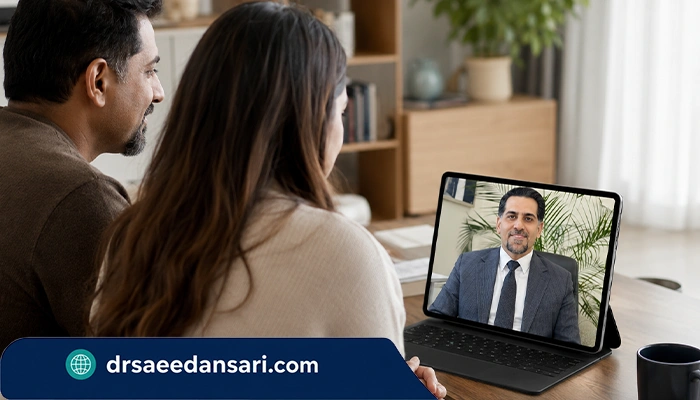
Online therapy with a Persian-speaking therapist allows Iranian immigrants, students, professionals, couples, and families living outside Iran to receive psychological support in a language that feels emotionally familiar. Through secure online sessions, clients can speak openly in Farsi without worrying about translation, cultural misunderstanding, or explaining every detail of Iranian family and social life.
Dr. Saeed Ansari provides online therapy sessions for Persian-speaking clients, especially Iranian immigrants living abroad. As a Farsi-speaking therapist, Dr. Ansari helps clients explore emotional challenges in a culturally sensitive and supportive space—no matter where they live.
What Is Farsi Therapy Online?
Farsi therapy online is psychological counseling or therapy delivered through secure video sessions in the Persian language. Instead of visiting a therapist’s office in person, clients can connect with a Farsi-speaking therapist from home, work, or any private space.
For Iranian immigrants living in countries such as the United States, Canada, Germany, the United Kingdom, Australia, Sweden, the Netherlands, or anywhere else, finding a local Online Persian psychologist can be difficult. Online therapy removes this geographical barrier and makes it easier to receive support from someone who understands both the language and the cultural background of Iranian clients.
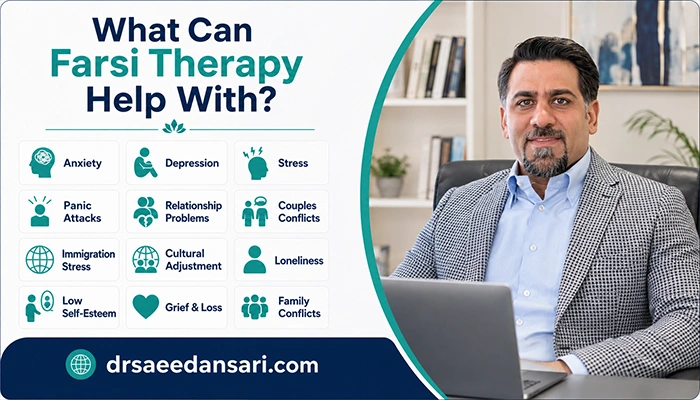
Online Farsi therapy can be helpful for people dealing with:
- Anxiety after immigration
- Depression and homesickness
- Cultural adjustment
- Relationship and marriage problems
- Parenting challenges abroad
- Loneliness and isolation
- Identity conflicts
- Family pressure from a distance
- Stress caused by work, study, or legal uncertainty
For many clients, the ability to speak naturally in Farsi makes therapy feel more comfortable, honest, and emotionally accurate.
Online Farsi Therapy with Dr. Saeed Ansari
If you are an Iranian living abroad and feel that therapy in English does not fully express what you are experiencing, online sessions with Dr. Saeed Ansari may be a suitable option.
Dr. Ansari works with Persian-speaking clients through online therapy sessions, helping them talk about emotional, relational, and immigration-related challenges in Farsi.
Need to talk to a Persian-speaking therapist?
Dr. Saeed Ansari offers online therapy sessions for Iranian immigrants living abroad.
Why Language Matters in Therapy
Therapy is built on communication. When a person cannot express emotions clearly, therapy may feel limited or incomplete. Many Iranian immigrants can speak English well in daily life, at work, or at university, but emotional expression is different.
It is often easier to speak about pain, fear, shame, grief, family memories, childhood experiences, or relationship struggles in your native language.
When therapy happens in Farsi, clients may feel more able to say exactly what they mean. They do not have to pause and translate every feeling. They do not need to search for the “right word” in another language. Instead, they can focus on what matters most: understanding themselves and working toward emotional healing.
Many emotional expressions in Persian culture carry subtle meanings that are difficult to translate accurately into English. A Persian-speaking therapist can understand the deeper emotions, cultural context, and personal experiences behind these expressions rather than interpreting them only at a literal level.
Cultural Understanding Beyond TranslationFor Iranian immigrants, therapy is not only about language. Culture also matters.
A therapist who understands Iranian culture may better understand the emotional weight of family expectations, marriage pressure, parent-child dynamics, gender roles, immigration stress, and the conflict between traditional values and life in a Western society.
Many Iranian immigrants experience a quiet internal conflict: they are trying to build a new life abroad while still feeling connected to the values, memories, and emotional patterns they grew up with. This can affect relationships, parenting, career choices, self-esteem, and mental health.
A culturally aware Farsi-speaking therapist can help clients explore questions such as:
- Why do I feel guilty living far from my family?
- Why do I feel lonely even though I have a good life abroad?
- How can I raise my children between two cultures?
- How do I manage pressure from my family in Iran?
- Why has immigration affected my marriage?
- Why do I feel anxious after moving to another country?
- How can I build a new identity without losing my roots?
These are not just personal questions. They are often deeply connected to migration, culture, family, and belonging.
Benefits of Online Farsi Therapy for Iranian Immigrants
Online therapy has made mental health support more accessible for Persian-speaking people around the world. For immigrants, this flexibility can be especially valuable.
1. Access from Anywhere
You do not need to live near a Persian-speaking therapist. Whether you are in Europe, North America, Australia, the Middle East, or another region, you can attend therapy online from a private space.
2. Therapy in Your Native Language
Speaking in Farsi can help you describe emotions more naturally and deeply. This is especially important when discussing childhood memories, family relationships, grief, anxiety, depression, or trauma.
3. Cultural Sensitivity
A Farsi-speaking therapist who understands Iranian culture can recognize emotional patterns that may not be obvious to someone outside the culture.
4. More Privacy and Comfort
Many people feel more comfortable joining therapy from home. Online sessions can reduce the stress of commuting, waiting rooms, and being seen entering a clinic.
5. Flexible Scheduling
Online therapy is often easier for immigrants who have busy work schedules, university commitments, family responsibilities, or different time zones.
6. Support During Migration Challenges
Immigration can affect mental health in many ways. Online therapy can help clients process the emotional impact of relocation, separation from loved ones, cultural adjustment, and uncertainty about the future.
When Should You Consider Farsi Therapy Online?
You do not need to wait until life feels unbearable before starting therapy. Many people begin therapy because they feel stuck, overwhelmed, confused, or emotionally tired.
You may benefit from online Farsi therapy if:
- Anxiety, sadness, or emotional disconnection after immigration
- Homesickness and missing family deeply
- Loneliness in a new country
- Difficulty expressing emotions in English therapy
- Relationship changes after moving abroad
- Family pressure and emotional guilt
- Parenting children between two cultures
- Farsi Child Psychologist Online for Children
- Child anxiety, anger, or adjustment issues after immigration
- Support from someone who understands Iranian culture
Therapy is not only for crisis. It can also support self-awareness, emotional growth, better relationships, and healthier decision-making.
Iranian Mental Health for Immigrants with the Help of Dr. Saeed Ansari
Start Therapy Online with Dr. Saeed Ansari
If you are an Iranian immigrant living abroad and looking for a therapist who understands your language and cultural background, Dr. Saeed Ansari offers online Farsi therapy sessions.
Feeling anxious, lonely, or emotionally overwhelmed after immigration?
You do not have to go through it alone.
Dr. Saeed Ansari provides online therapy in Farsi for Iranian immigrants, couples, and Persian-speaking clients living outside Iran.

What Happens During the First Online Therapy Session?
Many people feel nervous before their first therapy session. This is completely normal, especially if it is your first time talking to a therapist.
The first session is usually focused on understanding your situation. Your therapist may ask about your background, current concerns, family relationships, immigration experience, work or study life, emotional symptoms, and goals for therapy.
You do not need to prepare a perfect explanation. You can simply start with what feels most important.
The first session may include questions such as:
- What made you decide to start therapy now?
- How long have you been feeling this way?
- How has immigration affected your emotional life?
- What kind of support are you looking for?
- What would you like to change or understand better?
Therapy is not about being judged or criticized. It is a confidential and supportive process where you and your therapist work together to understand what is happening and find healthier ways forward.
Persian Couples Therapy Online for Iranians abroad with Dr. Saeed Ansari
How to Prepare for an Online Therapy Session
To make your online therapy session more comfortable, try to prepare a quiet and private space before the appointment.
Helpful tips include:
- Choose a private room where you will not be interrupted
- Use headphones for more privacy
- Check your internet connection before the session
- Keep water and tissues nearby
- Write down the main topics you want to discuss
- Give yourself a few minutes after the session before returning to work or daily responsibilities
Online therapy works best when you feel safe enough to speak honestly.
Book an Online Farsi Therapy Session with Dr. Saeed Ansari
You deserve support in a language that feels natural and with a therapist who understands the emotional experience of Iranian immigrants.
Ready to begin online therapy in Farsi?
Dr. Saeed Ansari offers online therapy sessions for Iranian immigrants and Persian-speaking clients living abroad.