

Taking the first step toward better mental health takes courage. However, finding the right help often feels confusing. You might stare at a list of credentials and wonder who can actually help you.
Do you need a psychologist to talk through past trauma? A psychiatrist for medication? Or a therapist for weekly support? The titles sound similar, but their training and daily roles differ.
This guide breaks down the exact differences between these mental health professionals. We will help you understand their specific roles so you can confidently book the right appointment for your needs.
“Have you ever asked yourself, ‘Who can truly understand my background and speak my language?’ You are not alone. Navigating mental health choices in a foreign country feels exhausting. If you are looking for the best psychologist for Persian speakers outside of Iran, Dr. Saeed Ansari offers the exact cultural and clinical support you need to confidently move forward.”
What is a Psychologist and Their Treatment Approach?
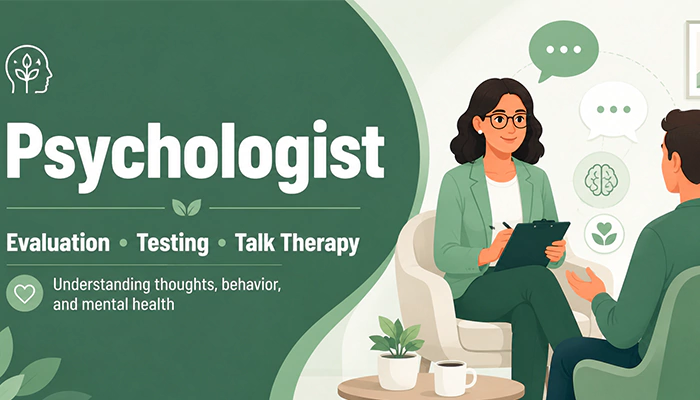
A psychologist holds a doctoral degree (a Ph.D. or Psy.D.) in psychology. They dedicate five to seven years to studying human behavior, brain function, and mental health conditions.
Psychologists focus on how your thoughts and behaviors impact your life. Their primary treatment approaches include:
- Psychological Evaluation: They conduct in-depth clinical interviews to understand your mental health history and current struggles.
- Psychological Testing: They administer standardized tests to diagnose specific conditions. This includes ADHD, learning disabilities, and severe mood disorders.
- Talk Therapy: They use evidence-based therapies like Cognitive Behavioral Therapy (CBT). This process helps you identify negative thought patterns and build healthier habits.
Psychologists do not prescribe medication in most regions. Instead, they treat mental health conditions through communication, behavior modification, and targeted therapeutic techniques.
Psychiatrist: The Mental Health Professional Who Can Prescribe Medication
A psychiatrist is a medical doctor. They hold an M.D. (Doctor of Medicine) or D.O. (Doctor of Osteopathic Medicine). After medical school, they complete a specialized residency in psychiatry.
Because they are medical doctors, psychiatrists understand the complex relationship between your physical and mental health. Their role focuses heavily on the biological aspects of mental illness.
Key aspects of a psychiatrist’s approach include:
- Medical Evaluation: They evaluate your physical health to rule out medical conditions that cause psychiatric symptoms (like thyroid issues causing anxiety).
- Medication Management: They prescribe and monitor psychiatric medications. This includes antidepressants, mood stabilizers, and antipsychotics.
- Severe Condition Treatment: They manage complex mental health conditions such as schizophrenia, bipolar disorder, and severe clinical depression.
Many psychiatrists focus solely on prescribing and adjusting medications. They often refer patients to a psychologist or therapist for regular talk therapy.
Who is Considered a Therapist?
“Therapist” is a broad umbrella term. It applies to professionals trained to provide counseling and rehabilitation. Unlike psychologists and psychiatrists, therapists hold a master’s degree rather than a doctorate or medical degree.
Common types of therapists include:
- Licensed Professional Counselors (LPCs): They provide mental health and substance abuse care.
- Licensed Clinical Social Workers (LCSWs): They offer therapy and connect patients with community resources.
- Licensed Marriage and Family Therapists (LMFTs): They specialize in relationship dynamics and family counseling.
Therapists focus on practical, daily mental health management. They help you cope with grief, navigate relationship issues, manage daily anxiety, and process life transitions. They cannot prescribe medication or perform formal psychological testing.

Quick Comparison Table (Education, Medication, Treatment Method)
Here is the quick comparison table
| Professional | Education Level | Can Prescribe Medication? | Primary Treatment Method |
| Psychiatrist | Medical Degree (M.D. or D.O.) | Yes | Medical evaluation and medication management |
| Psychologist | Doctoral Degree (Ph.D. or Psy.D.) | No | Psychological testing and evidence-based talk therapy |
| Therapist | Master’s Degree (MA, MS, MSW) | No | Talk therapy and daily coping strategies |
Which Professional Do Iranians Abroad Need?
Immigrating to a new country creates unique mental health challenges. You face culture shock, the stress of building a new life from scratch, and the emotional weight of living far from family. These heavy transitions require specialized support.
For Iranians living abroad, language and cultural nuances matter deeply. Trying to explain complex cultural family dynamics or specific emotional struggles in a second language creates an unnecessary barrier to healing. You need a professional who understands your cultural background without requiring long explanations.
For comprehensive therapy and deep psychological support, consulting a mental health professional who shares your native language is a priority. Connecting with a Persian psychologist online provides a safe, familiar environment to process the distinct challenges of immigration, identity, and homesickness. This allows you to focus purely on your mental health journey rather than navigating language barriers.
“Finding a professional who truly grasps your cultural nuances transforms the therapeutic experience. Recognized as the best psychologist for Persian speakers outside of Iran, Dr. Saeed Ansari delivers empathetic, expert care directly in your native language. Do not let distance or language barriers delay your progress. Take the right step for your mental health today and schedule your online consultation.”
Ready to begin online therapy in Farsi?
Dr. Saeed Ansari offers online therapy sessions for Iranian immigrants and Persian-speaking clients living abroad.