

Immigration anxiety can begin or become more noticeable after you have already moved to another country. Even when immigration was a planned, positive, and deeply wanted decision, settling into a new environment can create emotional pressure that was difficult to anticipate beforehand.
For some people, anxiety appears after the initial excitement of moving has faded. Daily life may suddenly involve unfamiliar routines, fewer close relationships, communication difficulties, new financial or professional responsibilities, and uncertainty about the future. These changes can leave a person feeling tense, insecure, or constantly alert even when there is no immediate danger.
Understanding why anxiety after immigration develops is an important first step toward managing it effectively.
What Is Immigration Anxiety After Moving Abroad?
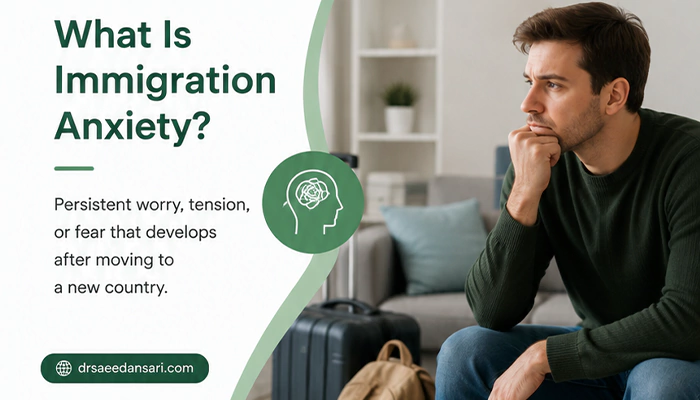
Immigration anxiety refers to persistent or distressing anxiety that develops or becomes significant after moving and beginning life in another country.
It may involve ongoing worry about work, finances, relationships, communication, social acceptance, family members back home, or whether you will be able to build a stable life in your new environment. Some people describe feeling as though they must always be prepared for something to go wrong.
A certain level of stress is a normal part of adjusting to major life changes. Learning new systems, building routines, and finding a sense of belonging all take time. However, when anxiety becomes intense, continues for a prolonged period, or begins interfering with everyday functioning, professional support may be helpful.
What Causes Anxiety After Immigration?
There is usually no single cause of post-immigration anxiety. Several emotional, social, and practical pressures may occur at the same time.
- Loss of familiar routines and surroundings:
Daily activities may feel more difficult and unpredictable in a new country. - Language and communication difficulties:
Communicating in another language can make social and everyday situations more stressful. - Social isolation:
Being away from familiar friends, relatives, and community support can increase anxiety. - Homesickness:
Missing family, familiar places, cultural traditions, food, and language can create emotional distress. - Employment and financial difficulties:
Work-related pressure, financial responsibilities, and concerns about long-term stability can increase anxiety. - Increased responsibilities:
Managing more responsibilities after immigration can make adjustment more challenging. - Cultural and social differences:
Different social expectations may affect a person’s sense of identity and belonging.
These challenges do not necessarily mean that immigration was the wrong decision. They often reflect how demanding it can be to rebuild familiar sources of stability in a new environment.
Dr. Saeed Ansari Online Persian psychologist
If anxiety has remained persistent since moving abroad or is beginning to interfere with your daily life, online psychotherapy with Dr. Saeed Ansari can provide a structured space to understand the sources of your anxiety and develop healthier ways of responding to them.
Symptoms of Immigration Anxiety
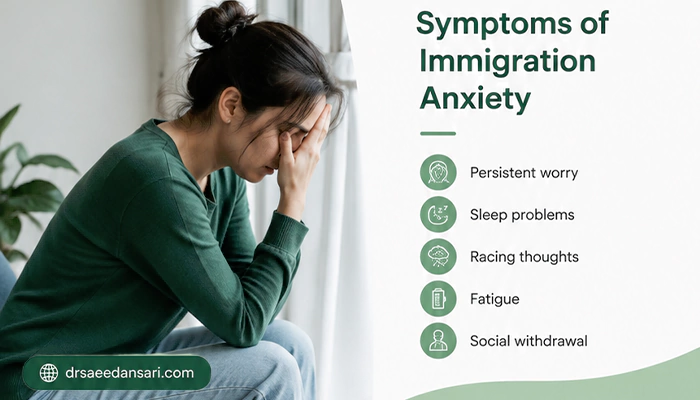
Anxiety after moving abroad can affect thoughts, emotions, the body, and everyday behavior. Symptoms vary from person to person and may include:
- Persistent worry that is difficult to control
- Feeling constantly tense or on edge
- Racing or repetitive thoughts
- Excessive fear about the future
- Difficulty concentrating
- Irritability or becoming overwhelmed easily
- Sleep difficulties
- Fatigue despite adequate rest
- Restlessness
- Muscle tension
- Rapid heartbeat during periods of anxiety
- Avoiding social situations or unfamiliar activities
- Difficulty relaxing or enjoying life in the new country
Some people become preoccupied with whether they will succeed professionally, fit into the new culture, make friends, manage financially, or eventually feel at home.
Having one or more of these experiences does not automatically mean that someone has an anxiety disorder. Their intensity, persistence, and impact on everyday functioning are more important than the presence of any single symptom.
When Does Post-Immigration Anxiety Need Professional Help?
Temporary stress during adjustment is common, particularly during the first stages of establishing a new life. The situation becomes more concerning when anxiety remains intense, feels increasingly difficult to manage, or repeatedly prevents you from doing things that matter to you.
Professional psychotherapy may be worth considering when anxiety significantly affects:
- Work or academic performance
- Sleep and physical relaxation
- Relationships with partners, friends, or family
- Social activities
- Daily responsibilities
- Concentration and decision-making
- Your ability to feel reasonably comfortable in your new environment
You do not need to wait until anxiety becomes overwhelming before speaking with a mental-health professional. An individualized assessment can help clarify what you are experiencing and what type of support may be appropriate.
How Is Immigration Anxiety Treated?
Treatment for immigration anxiety should reflect the person’s symptoms, circumstances, history, and current challenges rather than relying on a single approach for everyone.
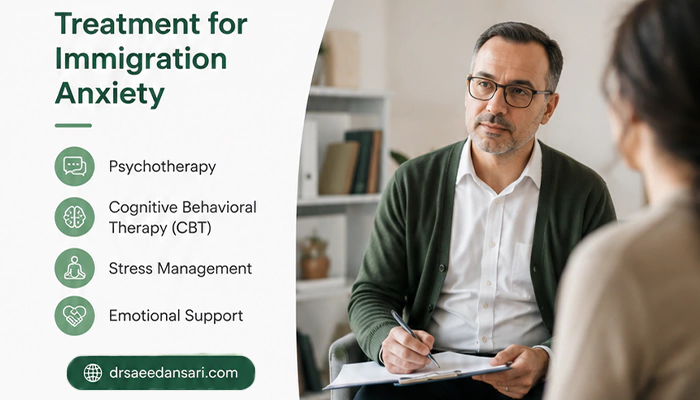
Psychotherapy can help identify the situations and thought patterns that maintain anxiety and develop more effective ways of responding to uncertainty.
Depending on individual needs, treatment may include approaches such as Cognitive Behavioral Therapy (CBT), anxiety-focused psychotherapy, supportive psychotherapy, stress-management strategies, and techniques for improving emotional regulation.
Therapy may also help a person:
- Recognize unhelpful patterns of thinking
- Respond differently to catastrophic predictions
- Develop healthier coping strategies
- Tolerate uncertainty more effectively
- Gradually reduce avoidance
- Strengthen emotional and social support
- Rebuild confidence in everyday situations
Online Treatment for Immigration Anxiety
Accessing in-person psychotherapy after immigration can be difficult, especially when local services are unfamiliar or receiving therapy in your preferred language matters to you. Online therapy allows immigrants to speak with a mental-health professional from anywhere, and for Persian-speaking immigrants, services such as Farsi Therapy Online for Iranian can make it easier to discuss complicated feelings, family dynamics, cultural expectations, and immigration-related experiences in Farsi while developing practical ways to manage anxiety.
Treatment for Anxiety After Immigration in Persian
If anxiety after immigration is affecting your sleep, work, relationships, social life, or ability to feel settled abroad, you can consider taking the next step by scheduling an online psychotherapy session with Dr. Saeed Ansari. A professional evaluation can help you better understand what is maintaining your anxiety and identify an appropriate treatment approach for your individual needs.